


Start your electric-scooter U-lock shortlist with the Kryptonite New York Standard if you need more shackle room, the Evolution Mini-7 for a narrower lock-up, or the Hiplok D1000 if angle-grinder resistance is a buying priority. The right purchase is the one that captures your scooter and a fixed anchor securely, while remaining practical to carry.
These are specification-led recommendations for standing electric scooters, not hands-on attack tests or confirmed fits for individual models. Below are the tradeoffs that help narrow the purchase, followed by the measurements and parking checks that can rule a lock in or out.
As an Amazon Associate I earn from qualifying purchases. The shop links below open product-name searches, not verified offers. Results can include other models, accessories or no exact match. Check the exact model, seller, package contents, compatibility and current terms before ordering.
Three U-locks worth comparing
Use the listed openings as a first filter. Curved corners, shackle thickness and the angle needed to close the crossbar still matter; a rectangle with the same dimensions is not proof of fit.
Kryptonite New York Standard 002154: start here for more clearance
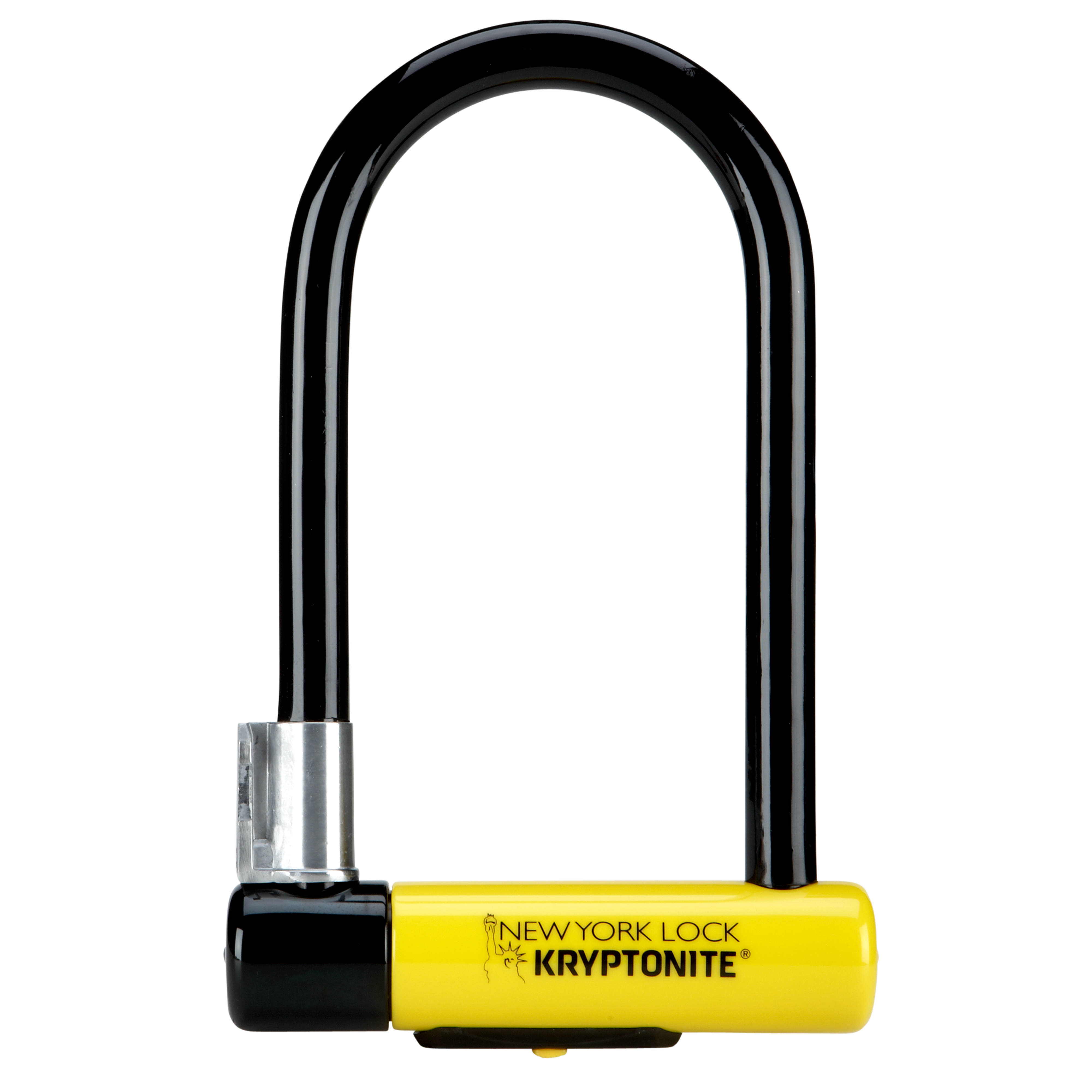
Who it suits: Riders whose scooter and usual rack need more room than a mini U-lock provides. Its nominal internal opening is 4 × 8 inches, compared with the Mini-7’s 3.25 × 7 inches, according to Kryptonite’s internal-size chart.
- Pros: More width and reach than the other two shortlisted locks; the 002154 specifications list a 16 mm steel shackle and an included FlexFrame-U carrying bracket.
- Cons: Kryptonite lists 2.02 kg, a meaningful extra load on a commute. The larger opening can also leave unnecessary space on a small locking point, and the bicycle-style bracket is not confirmed to fit your scooter.
Buying call: Make this your first measurement comparison if compact locks have been too restrictive. Check model 002154 rather than assuming every New York-branded listing is the same lock.
Search Kryptonite New York Standard on Amazon US · Search Kryptonite New York Standard on Amazon AU
Kryptonite Evolution Mini-7 002079: the narrower, lighter-listed option
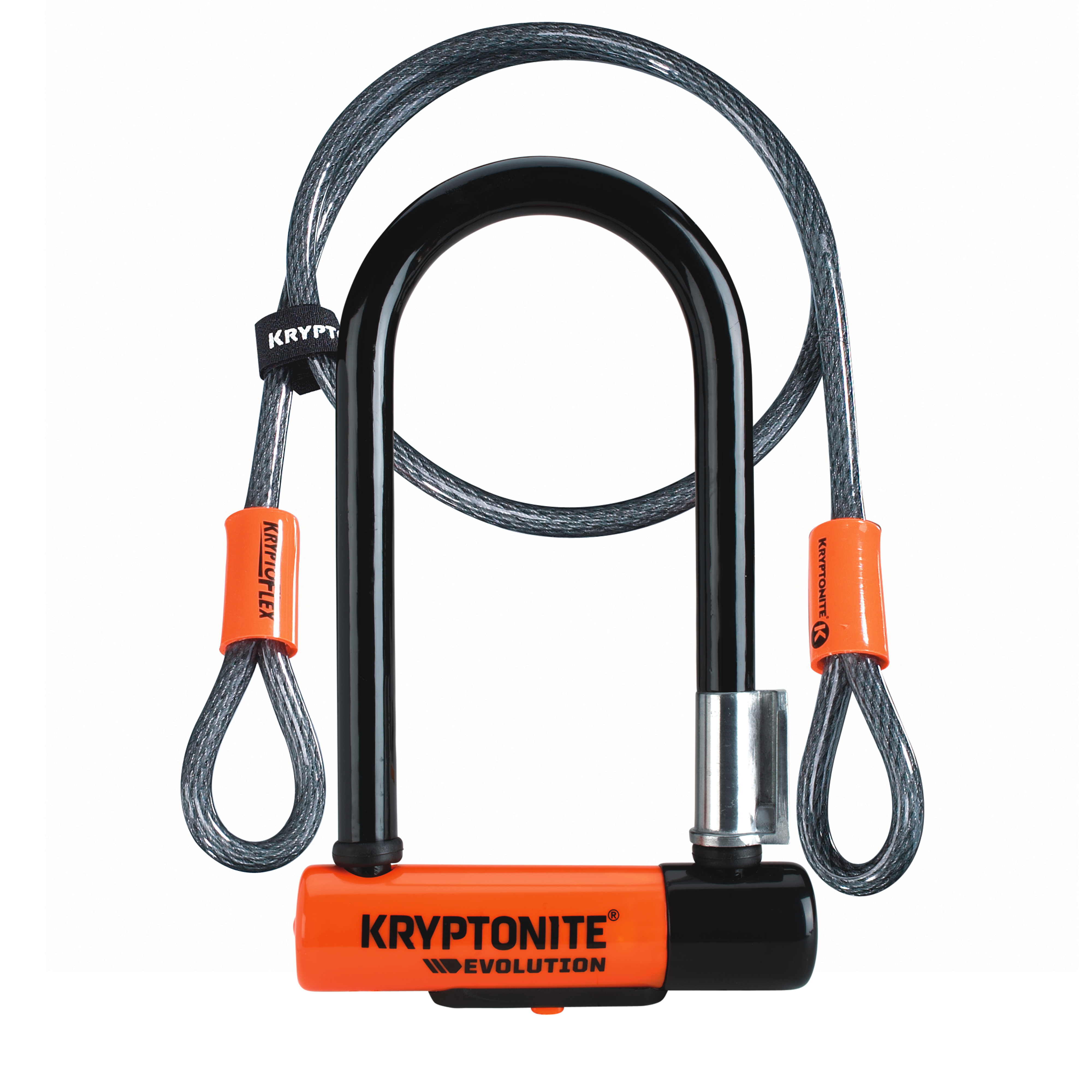
Who it suits: Riders with a small, secure structural opening and a slim rack that sits close to the scooter. It offers less room than the New York Standard, so measure both the scooter and anchor before choosing it.
- Pros: The Mini-7 with 4-foot Flex Cable package has a 13 mm shackle and a manufacturer-listed weight of 1.61 kg, below the New York Standard’s listed weight. A carrying bracket is included.
- Cons: The narrow opening may fail around wider necks or posts. A bundled accessory cable does not solve a U-lock that cannot securely retain the scooter.
Buying call: Choose it for a verified close-fitting arrangement, rather than simply because “mini” sounds easier to carry. Check that the listing is the 002079 lock-and-cable package; similar names and older versions exist.
Search Kryptonite Evolution Mini-7 on Amazon US · Search Kryptonite Evolution Mini-7 on Amazon AU
Hiplok D1000: consider it when angle-grinder resistance matters
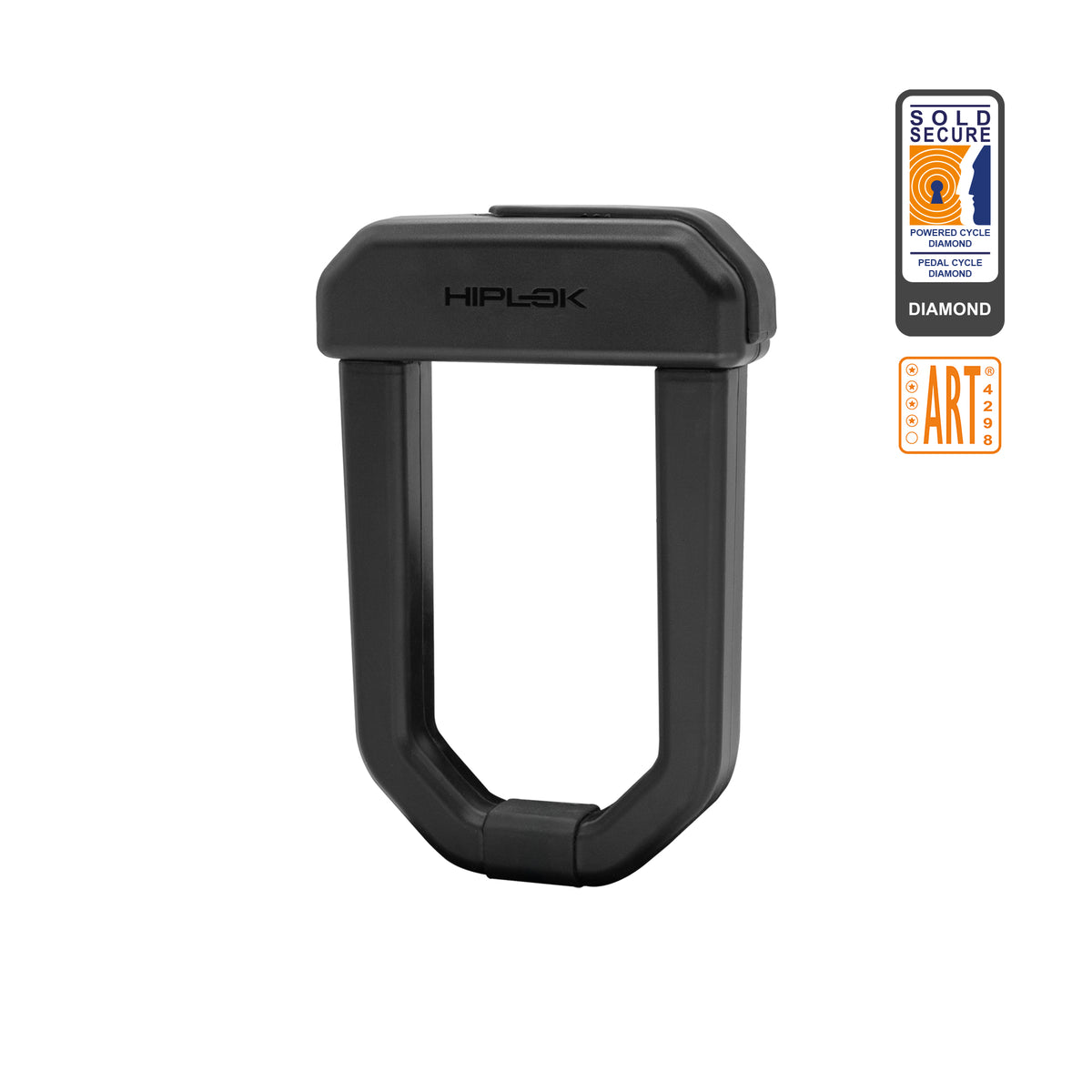
Who it suits: Buyers who want a lock specifically designed to resist angle-grinder attacks and can accommodate its compact locking area. Hiplok describes the D1000 that way; this guide has not independently attack-tested it.
- Pros: A purpose-designed alternative to the conventional steel-shackle options above. Hiplok provides a printable fit guide, useful before committing to this model.
- Cons: The official size guide lists only 92 mm of internal width and 155 mm of internal length, plus a 1.9 kg weight. It is shorter inside than both Kryptonite choices, so a strong specification will not rescue an unsuitable fit.
Buying call: Shortlist the D1000 for its stated attack-resistance design, then verify the exact lock approval your insurer requires and trial the opening. “Resistant” does not mean theft-proof; the scooter and anchor remain part of the security setup.
Search Hiplok D1000 on Amazon US · Search Hiplok D1000 on Amazon AU
Before ordering: find a locking point that retains the scooter
Check the scooter manual for a designated locking point first. If it is unclear whether a frame section can take a lock, ask the manufacturer with a photograph of your exact model. A convenient gap beside the folding mechanism is not automatically a suitable security point.
A fixed opening in the frame
Some scooters have an enclosed opening between the steering neck and deck. Passing the shackle through that opening can provide a useful attachment, provided it is a substantial, non-removable part of the structure. Kryptonite’s fixed-passthrough guide distinguishes this design and stresses matching the lock to the scooter.
A scooter without a frame opening
Some models need a close-fitting lock around a suitable structural section near the neck and deck. Kryptonite’s non-passthrough guidance describes model-dependent positions above the wheel or between the neck and deck. Treat those as possible locations to assess, not universal instructions.
The important question is what the closed lock retains. Check that the scooter cannot simply move out of the loop when lifted or tilted. Do not assume a straight length of stem, handlebar, carrying hook, cable, plastic fender or removable accessory provides a secure attachment.
Measure the usable opening, not the outside of the lock
A product’s overall dimensions tell you little about the space available inside its shackle. Find the manufacturer’s internal width and internal usable length, then compare them with the scooter and the rack you actually use.
- Record the scooter’s locking-point dimensions. Measure across the section the lock must capture. Note protruding covers and cables that need clearance.
- Measure a representative anchor. A slim cycle-rack tube and a broad post make very different demands on a U-lock.
- Allow for the gap between them. The scooter may not sit flush against the rack because of its deck, wheel or handlebar.
- Check the approach angle. You need space to insert and remove the shackle and refit the crossbar. A lock may enclose both objects on paper but be impossible to install in practice.
- Confirm key access. You should be able to unlock it without bending a cable, pressing against a brake part or lifting the scooter awkwardly.
Measure in millimeters or inches consistently. For conversion, one inch is 25.4 mm. A cardboard outline of the advertised internal opening is a useful shopping aid, but it cannot reproduce shackle thickness, curved corners or the space needed to attach the crossbar. A careful physical trial is better.

Choose the smallest opening that works comfortably
A compact U-lock can make it easier to achieve a close fit, but buying the shortest one without measuring often backfires. You still need to capture the anchor. Excessively tight placement can load trim, trap wiring or prevent full engagement.
Choose the smallest usable opening that fits your ordinary parking locations without forcing the lock. If a particular rack requires a very large shackle with substantial empty space, consider another suitable rack or a different lock format. Do not compromise the attachment just to use a lock you already own.
Fit and attack resistance are separate checks. Sold Secure explains its Pedal Cycle ratings, and its Powered Cycle scheme is a separate category. Look up the exact product and category rather than treating a brand’s own numeric score as an independent rating. If insurance is involved, ask which exact lock requirements apply to your scooter and policy.
Check the anchor before closing the lock
Use a purpose-built, firmly anchored rack where parking is permitted. Inspect it for loose connections or damage. Avoid an open-topped object that the locked scooter could be lifted over. An expensive lock cannot make a weak or movable anchor secure.
Position the scooter without blocking a path, doorway, curb ramp or someone else’s cycle. Prefer a visible, well-lit location. Visibility can help, but it does not guarantee that someone will intervene.
Keep the lock clear of the ground where practical. Kryptonite’s U-lock instructions advise an anchored object, a snug fit and avoiding ground-level placement. Apply that guidance without letting the lock hang against a brake rotor or pull on the scooter’s controls.
Run this check every time you park
- The lock captures both the suitable structural section and the anchor.
- The shackle is fully seated and the locking mechanism has engaged.
- A gentle pull confirms the crossbar stays closed.
- The scooter cannot slide out of the closed loop.
- No cable, brake component, charging port or folding control is trapped.
- You have removed the phone, bag and other easily detachable valuables.
Do the first full fit check at home or another quiet location, with the scooter powered off and supported. Do not partially dismantle safety-critical parts to make a lock fit. If the only available attachment is questionable, take the scooter with you or use secure storage instead.

Carry the lock without creating a riding hazard
Use a compatible bracket in a location permitted by the scooter and lock manufacturers, or a suitable bag that carries its weight securely. Turn the handlebars through their full range and check folding clearance with the scooter stationary. A heavy lock should not swing from the handlebar, strike your legs or interfere with steering.
Add layers with realistic expectations
A U-lock creates a physical barrier; an alarm or tracker serves a different purpose. You can explore the site’s scooter alarm roundup after establishing a workable lock-up. Verify each alarm’s specifications and do not rely on a siren to stop a theft.
No combination guarantees theft prevention or recovery. Keep your purchase record and serial number somewhere accessible, and photograph the scooter before anything happens. For regular long stays, prioritize genuinely secure storage over relying on a stronger lock alone. A home storage stand can help organize an indoor parking space, but a freestanding rack is not automatically a security anchor. Check load and wheel compatibility separately.
Which U-lock should you buy?
Start with the New York Standard when clearance is your main uncertainty. Choose the Evolution Mini-7 when you have confirmed a snug lock-up and want the lower listed carrying weight. Consider the Hiplok D1000 when its stated angle-grinder-resistant design is the reason for upgrading, provided its shorter opening works.
Before paying, compare the exact model, seller, included bracket and return terms in your region. If none of these locks captures a substantial scooter section and a secure anchor without trapping controls or leaving a slide-off route, do not force the purchase. Change the parking arrangement or investigate a different lock format. A lock you can use correctly at your actual destination is the useful buy.
Sources
- Kryptonite: New York Standard 002154 and Evolution Mini-7 002079
- Kryptonite: internal U-lock size comparison
- Hiplok: D1000 product information and printable size guide
- Kryptonite: fixed-passthrough e-scooter frames
- Kryptonite: non-passthrough e-scooter frames
- Kryptonite: U-lock instructions
- Sold Secure: Pedal Cycle ratings and Powered Cycle ratings
Hero image credit: Electric scooters at a dedicated rack outside Harvard’s Cabot Science Library. The photograph shows parking context, not a security assessment of each lock-up. Photo: 4300streetcar · CC BY 4.0. Uncropped. No retouching; supplied image may be a source-generated reduced-resolution version.
