


As an Amazon Associate I earn from qualifying purchases.
The right scooter pump depends on where you use it: an electric inflator for convenient top-ups, a compact hand pump for a ride kit, or a floor pump for home maintenance. These six options give you a practical shortlist. With recessed valves, choose for the connection first: no pump is useful if its hose end cannot reach and seal without bending the valve.
These are specification-based recommendations, not hands-on pump tests. We checked manufacturer product information on 20 October 2026. They apply to intact pneumatic tires; damaged valves and tires that will not hold pressure need repair.
Six scooter pumps at a glance
These picks cover different maintenance setups. Every option is conditional on the hose or approved extension reaching your valve without bending the stem.
| Pump | Choose for | Main tradeoff |
|---|---|---|
| Xiaomi Air Compressor 2 | Electric top-ups with a digital target | Keep it charged; check connector clearance |
| Lezyne Sport Drive HP | A compact manual kit | No built-in gauge |
| Fanttik X9 Pro | Electric inflation with preset auto-stop | Battery upkeep and hose fit |
| Topeak JoeBlow Sport III | A full-size home floor pump | Bulky; head lever needs clearance |
| Lezyne Micro Floor Drive Digital HPG | Portable floor-style pumping with a gauge | Larger than a mini pump; select the right version |
| CYCPLUS A2 Pro | Another rechargeable option to compare | Cooling pauses and separate pressure verification |
Which scooter pump should you buy?
1. Xiaomi Portable Electric Air Compressor 2: for convenient pressure-setting

Choose it if: you want to set a target pressure and avoid hand-pumping during routine maintenance. Xiaomi documents a digital pressure display, adjustable settings, automatic stopping at the preset pressure and a quick-connect valve adapter.
- Pros: pressure setting and readout in one unit; electric inflation avoids manual pumping.
- Cons: another battery to keep charged; the supplied connector still needs physical clearance. Its scooter preset is not necessarily your scooter’s required pressure.
Before ordering: confirm the listing is the Air Compressor 2, check the supplied hose and adapter, and compare the head with your valve recess. Choose a permitted manual setting if the preset differs from your scooter manual. Stay with the pump while it runs.
View Xiaomi Portable Electric Air Compressor 2 on Amazon US · Search Xiaomi Portable Electric Air Compressor 2 on Amazon AU (paid links)
2. Lezyne Sport Drive HP: for a manual kit without charging
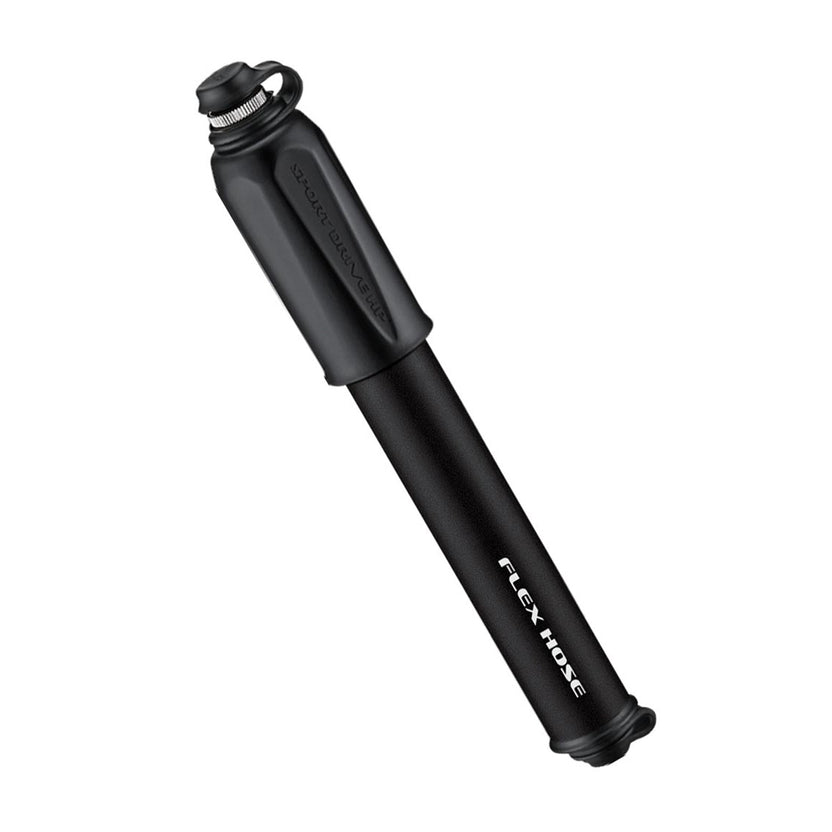
Choose it if: you prefer a hand pump for occasional top-ups and can use a separate compatible pressure gauge. Lezyne lists a Presta/Schrader Flex Hose and no built-in gauge.
- Pros: no battery to charge; a flexible hose lets the pump body sit away from the wheel while connected.
- Cons: requires manual effort and a separate pressure check; the hose end may still be too bulky for a particular recess.
Before ordering: select Sport Drive HP rather than a similarly named hose or different pump. Check the exact valve fitting and pressure range against your scooter. The included bicycle frame mount does not establish a safe scooter mounting location.
Search Lezyne Sport Drive HP on Amazon US · Search Lezyne Sport Drive HP on Amazon AU (paid links)
3. Fanttik X9 Pro: another electric option with manual pressure control
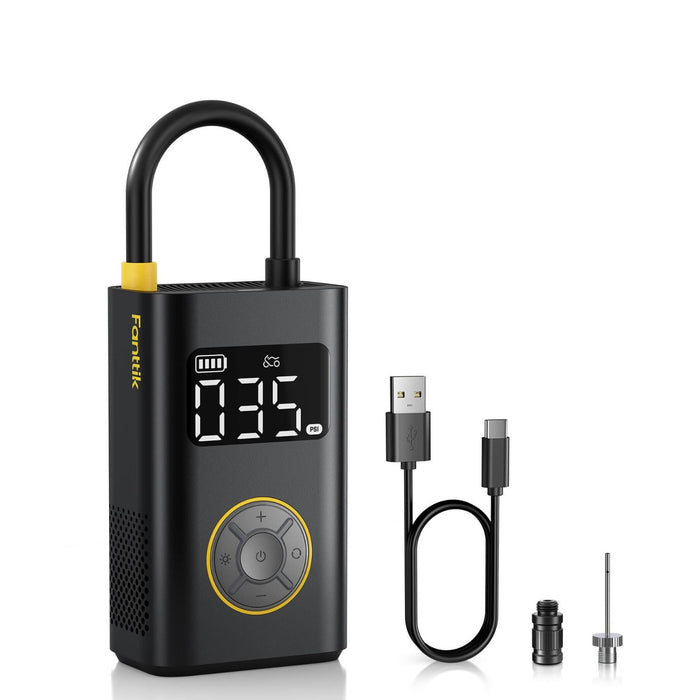
Choose it if: you want a rechargeable inflator for scooter top-ups and other household tire jobs. Fanttik lists a digital display, manual pressure control and automatic stopping at a preset target.
- Pros: target-pressure setting and auto-stop; integrated hose and accessory storage keep the kit together.
- Cons: needs charging and is larger than a basic hand pump. Its vehicle presets do not establish the correct scooter pressure.
Before ordering: choose the X9 Pro, rather than the similarly named X9 Ace or X9 APEX. Check the hose fitting against your valve recess and use the pressure specified by your scooter manufacturer.
Search Fanttik X9 Pro Portable Tire Inflator on Amazon US · Search Fanttik X9 Pro Portable Tire Inflator on Amazon AU (paid links)
4. Topeak JoeBlow Sport III: for a permanent home maintenance setup

Choose it if: the pump will live at home and you prefer a full-size manual pump. Topeak specifies a steel barrel and base, a 3-inch analog gauge, a 72cm hose and a TwinHead DX supporting Schrader, Presta and Dunlop valves.
- Pros: no charging; a floor-standing design and large gauge suit regular home maintenance.
- Cons: too bulky for a small ride bag. The lever-operated head still needs room around the valve; a long hose does not solve a tight recess by itself.
Before ordering: compare the head and lever clearance with your wheel. Use your scooter’s approved extension if needed, and confirm the gauge can be read clearly around your required operating pressure.
Search Topeak JoeBlow Sport III on Amazon US · Search Topeak JoeBlow Sport III on Amazon AU (paid links)
5. Lezyne Micro Floor Drive Digital HPG: for a portable manual pump with a gauge
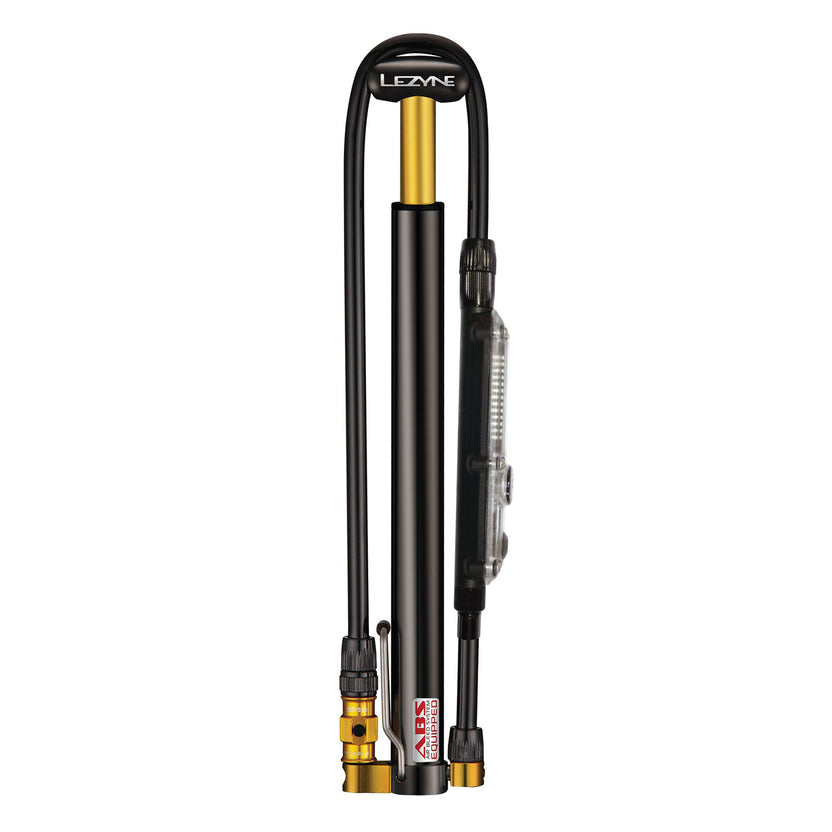
Choose it if: you want floor-style pumping in a more portable package, with a digital pressure readout. Lezyne lists an aluminum body, T-handle, stabilizing foot peg and a Presta/Schrader ABS Flip-Thread Chuck.
- Pros: manual inflation with an inline digital gauge; the hose lets you position the pump away from the wheel.
- Cons: larger than the Sport Drive HP, and its threaded chuck must fit the recess. The digital gauge also means this is not an entirely battery-free setup.
Before ordering: order the Digital HPG version shown here. The analog HPG and gauge-free HP are different versions. Confirm chuck clearance and follow Lezyne’s connection and air-release instructions.
Search Lezyne Micro Floor Drive Digital HPG on Amazon US · Search Lezyne Micro Floor Drive Digital HPG on Amazon AU (paid links)
6. CYCPLUS A2 Pro: a rechargeable alternative to compare before buying
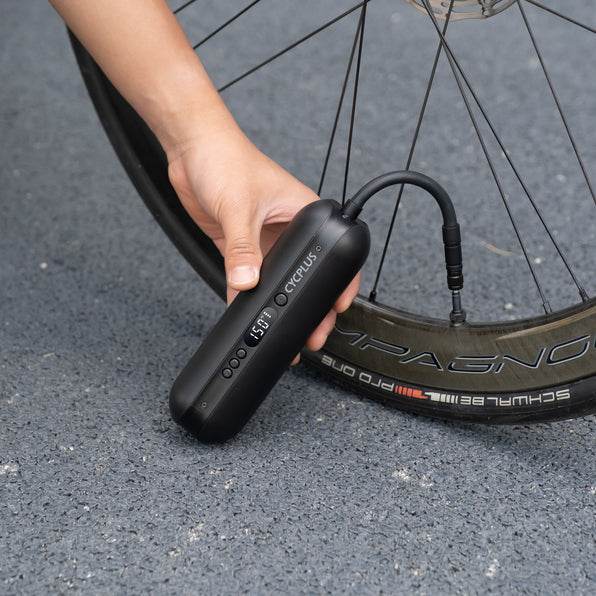
Choose it if: you prefer electric inflation and want another rechargeable option to compare with Xiaomi and Fanttik. Check the exact A2 Pro package rather than assuming every CYCPLUS model includes the same fittings.
- Pros: an electric alternative for riders who want to avoid hand-pumping; official product guidance covers charging and cooling between uses.
- Cons: requires charging and cooling breaks. CYCPLUS cautions that readings are a guide and recommends a separate instrument when an exact value is needed.
Before ordering: confirm the supplied hose, valve fitting, pressure range and display units with the seller. CYCPLUS recommends a cooling pause after 5–10 minutes of continuous use and warns that the hose can become hot.
Search CYCPLUS A2 Pro Electric Air Pump on Amazon US · Search CYCPLUS A2 Pro Electric Air Pump on Amazon AU (paid links)
Amazon search links open product-name results, not verified individual offers. Match the exact model and included parts, then check the seller, delivery, returns and current price. A search result does not establish stock or compatibility in either country.
Already own a suitable pump? Try the scooter manufacturer’s supplied extension before replacing the whole pump. Buy an extension only when both its pump connection and valve connection are confirmed. Do not buy a random hose just because its name includes “scooter.”

Check the tire and pressure specification first
Confirm that your scooter has air-filled tires. Both inner-tube and tubeless tires need inflation; solid and airless tires do not. Check the owner’s manual rather than relying on appearance or the word “puncture-resistant.”
Find the pressure recommendation for your exact model, including any front/rear or load instructions. A tire’s maximum-pressure marking is not automatically the scooter’s operating target. If the manual and replacement-tire markings conflict, ask the manufacturer before inflating.
There is no universal scooter PSI. Segway lists its E3 series tire specification in its E3 user manual; use your own model’s document, not a number copied from another scooter.
Choose a connection that actually fits
Start with the extension supplied with your scooter, if its manual calls for one. Otherwise, check:
- Valve type: identify the valve before choosing a pump head. Do not assume a bicycle accessory supports your scooter’s valve.
- Clearance: the head must reach the valve and leave room to turn a threaded collar or operate a locking lever.
- Compatibility: a replacement hose must suit both the pump and the valve, with a pressure rating appropriate for the task.
Similar names can hide important differences. For example, Lezyne’s support FAQ distinguishes its Presta/Schrader ABS Flex Hose from its Presta-only ABS Speed Flex Hose. A hose alone is not a promise of compatibility.

How to inflate a recessed scooter valve
1. Make the scooter stable
Switch it off, unplug the charger, and position it securely according to its manual. Work on a cool tire before riding. Rotate the wheel by hand only as the scooter’s design allows, keeping fingers clear of brakes and pinch points.
Look for cuts, bulges, a cracked valve stem, or a valve that appears pulled out of position. Stop if you find damage.
2. Remove the cap and connect gently
Remove the valve cap and keep it somewhere clean. Follow the pump and extension instructions for the connection order. Xiaomi’s Mi Electric Scooter 3 instructions, for example, include connecting an extension nozzle to the tire valve.
Align a threaded fitting straight and turn it by hand. Do not force crossed threads, twist the valve stem, or use pliers to make a poor-fitting head seal. A locking head needs enough clearance for its lever. Keep the hose relaxed rather than sharply bent.
3. Check the reading and set the correct units
Once connected properly, read the tire pressure. With an electric inflator, confirm both the target and the units before starting. A scooter preset may not match your scooter; choose a mode that allows the manual’s specified setting.
Xiaomi’s Air Compressor 2 manual gives preset modes but directs users to the inflated item’s instructions. The preset is a convenience, not a compatibility check.
4. Inflate while watching the gauge
Add air toward the specified pressure and stay with the pump, even if it has automatic shutoff. Stop if the connection leaks continuously, the reading behaves unexpectedly, or the inflator overheats. Do not keep pumping against an unexplained zero or sudden high reading.
For a manual pump, pause to check pressure as you approach the target. Do not add an arbitrary extra amount to compensate for possible air loss during removal.
5. Disconnect, check, and replace the cap
Stop the pump and disconnect as its instructions describe. Watch for hot fittings. A brief hiss during removal does not establish how much pressure was lost; use a compatible gauge if the final pressure is uncertain.
Do not automatically press a bleed button before disconnecting. Lezyne explains that its ABS button can release tire air on a Schrader connection, rather than only emptying the hose.
Remove a temporary extension and replace the cap. Leave an extension fitted for riding only if the scooter and accessory manufacturers explicitly permit it.

If the tire still will not inflate
Stop the pump and check the connection instructions once. Continued hissing, pressure that will not hold, a moving valve stem, or visible damage calls for a qualified scooter repairer. Repeatedly adding air does not fix a leak. A fully deflated tubeless tire with an unseated bead is beyond this routine top-up guide.
If replacement is needed, check our electric scooter replacement-tire guide, then confirm the exact size and fit with your manufacturer or repairer.
Quick questions
Can I use a bicycle pump?
Yes, if its valve connection, pressure range, gauge, and physical clearance suit your scooter. Compare head shapes in our tire-pressure gauge guide.
How often should I check pressure?
Follow your scooter’s inspection schedule and check before riding if a tire looks low or handling changes. Segway’s E3 manual warns that underinflation can damage tires and compromise safety.
What else belongs in my maintenance kit?
Keep the correct adapter, gauge, and manual together. Store the extension in a tool pouch so you can find it before your next pressure check.
Our buying recommendation
Start with the Xiaomi Air Compressor 2 if you want electric top-ups with a digital target, and compare the Fanttik X9 Pro and CYCPLUS A2 Pro for their current delivered price, fittings and local support. For a small manual kit, choose the Lezyne Sport Drive HP with a compatible gauge. If you want a gauge on a portable floor-style pump, consider the Lezyne Micro Floor Drive Digital HPG. For a pump that stays at home, the Topeak JoeBlow Sport III is the full-size option.
Before any purchase, check the valve recess and your scooter’s pressure instructions. If your existing pump works with the approved extension, keep it: solving access is more useful than buying another pump with the same clearance problem.
Sources
- Fanttik X9 Pro Portable Tire Inflator product information
- Topeak JoeBlow Sport III product information
- Lezyne Micro Floor Drive Digital HPG product information
- CYCPLUS A2 Pro Electric Air Pump product information
- Lezyne Sport Drive HP specifications
- E3 user manual
- Lezyne’s support FAQ
- Mi Electric Scooter 3 instructions
- Air Compressor 2 manual
- Xiaomi lists
Hero image credit: Xiaomi Portable Electric Air Compressor 2. Official product photograph: Xiaomi.
